

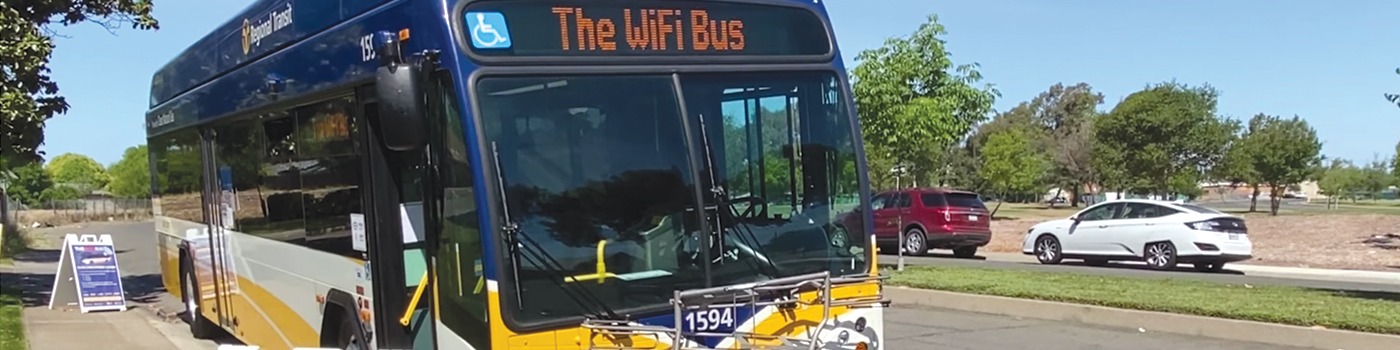

创新的多机构Wi-Fi巴士概念证明使用Aruba SD-Branch Gateways,Wi-Fi和Central提供与数字沙漠的连通性
-
客户资料
加利福尼亚州运输局(CALSTA),萨克拉曼多市和萨克拉曼多地区运输区(SACRT)合作将10辆公共交通巴士变成了60天的概念证明,每天提供高速的概念证明互联网访问萨克拉曼多的数字沙漠社区。- 垂直:政府
- Location: Sacramento, California, United States
Use Case
Bring access to communities with limited high-speed internet access during the COVID-19 pandemic, and beyond, by turning public transit buses into free wireless super-hotspots for a proof of concept to promote opportunities for distance learning, telework and telehealth.
要求
- Support distance learning, telework and telehealth with high-performance Wi-Fi
- Furnish broadband outdoor connectivity with sufficient range to enable social distancing
- Utilize an automated, centrally managed SD-Branch platform for intelligent, cost-effective networking
- 工程师可以通过其他州和地方政府机构轻松部署的解决方案
Outcomes
- Delivered high-performance Wi-Fi to schools, parks and libraries, census drives, fresh food distribution sites, resource fairs and community events via mobile super-hotspots
- 提供了可靠,安全的连接到目标社区
- Utilized an automated, smart, streamlined platform for speedy, zero-touch deployment and low network management overhead and fast report generation
- 统一technology contributed by multiple project partners to supply consistent user experiences, capture analytics and enable a guest portal
- 产生了用于确定用户需求和行为以及网络带宽需求的颗粒状分析报告
With schools, workplaces, community spaces, and public transit adjusting to public health guidelines during the first wave of the COVID-19 pandemic, the California State Transportation Agency (CalSTA) began considering how it could help close the digital divide at a time when a reliable internet connection became even more essential to daily life.“In California, approximately one in five students lack high-speed internet access and nearly half of all low-income households do not have broadband service at home,” explains Lori Pepper, the Deputy Secretary of Innovative Mobility Solutions for CalSTA. “We wanted to find a practical and cost-effective way to bring high-performance Wi-Fi connectivity to digital deserts to serve our residents during these days of tele-everything.”
Agencies Team Up to Develop Innovative Mobile Super-Hotspots
CalSTA asked the City of Sacramento and the Sacramento Regional Transit District (SacRT) to partner in the creation of outdoor mobile super-hotspots using SacRT transit buses in a 60-day proof of concept (POC).
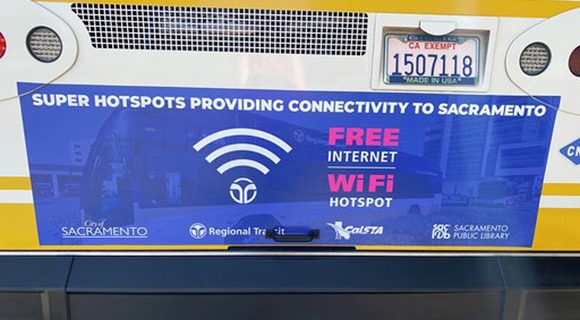
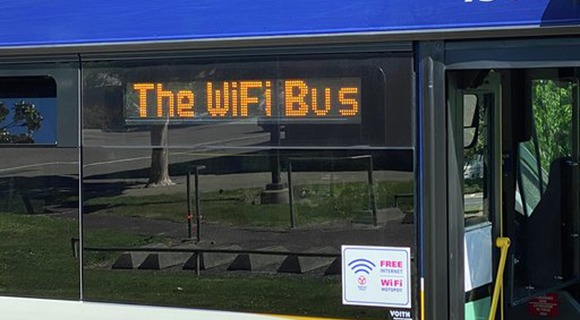
称为Wi-Fi巴士网络,多机构的工作由萨克拉曼多公共图书馆,公共卫生部门和Valley Vision Civic组织以及Calsta,City and acrt的代表领导。该小组的主要目标是安全地实现远程学习,支持远程服务并提供远程医疗机会。
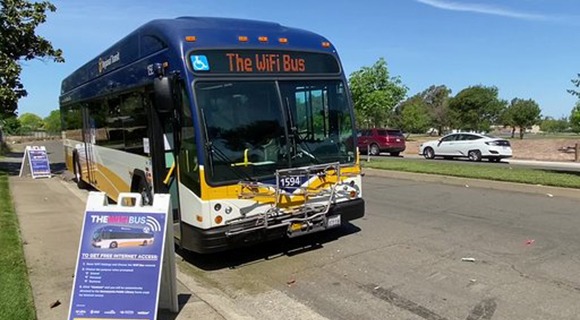

With the public library committed to providing Wi-Fi Bus parking at its branches and robust online resources for students to access when connected, the steering committee reached out to various cellular service providers, such as AT&T. The providers helped assemble a consortium of project partners including Aruba, a Hewlett Packard Enterprise company.
阿鲁巴的SD分支机关Wi-Fi巴士概念证明
In addition to supplying Wi-Fi connectivity, key project goals included determining the services users required, creating policy guidelines, and establishing the specific technologies necessary for successfully delivering, monitoring, and evaluating wireless access.
During the project’s design phase, Aruba and the other technology partners considered options for addressing multiple requirements for outfitting a total of 10 SacRT transit buses. This included broadcasting Wi-Fi widely enough to encourage social distancing and leveraging the available cellular network within a targeted neighborhood for connectivity.
Delivering outdoor connectivity and collecting analytics up to 1,800 feet
在三辆Wi-Fi巴士上,基于Aruba ESP(Edge Services平台)基础架构设计了Aruba SD-Branch解决方案。它由Aruba的370系列户外Wi-Fi访问点(APS),9000系列分支网关和统一网关管理的云本地中心组成,它们都是Aruba ESP(Edge Services Services Platform)中的解决方案。此外,来自两个不同合作伙伴的LTE路由器为三个主要的本地蜂窝网络提供了无线上行链路。
With the design specifications calling for APs to be mounted externally, selecting the 370 Series APs ensured Aruba could deliver Wi-Fi up to 1,800 feet away from the buses. Another key AP attribute was the location awareness required for gathering the proximity analytics that were key to the initiative’s evaluation phase.
Aruba Central Proves Key to Initiative Success
Using Central to deploy and manage the Aruba ESP-equipped buses streamlined all aspects of implementation and operations. The lean project administration team worked safely from their home offices after an AT&T technician affixed the Aruba APs to the sides of each bus, plugged in the branch gateways and connected the LTE routers.
连接齿轮后,项目管理团队使用Central的零触摸配置功能来自动化设置的配置,应用和管理。Central还创建了适当的隧道和繁殖路线,以建立灵活且安全的Wi-Fi网络覆盖拓扑。
Central的智能不仅将每个总线配置为几秒钟,而且还消除了整个POC的任何进一步的分支配置或管理干预措施。
Troubleshooting was also a breeze with Central’s end-to-end visibility. Of the two network connectivity incidents that occurred during the initiative, Central quickly identified both as being related to LTE router malfunctions.
粒状报告协助评估结果并确定持续的需求
Central also automated weekly reporting, ensuring the team could collect statistical data with a few clicks. The granular reports included bandwidth utilization, wireless data usage, and longest connected distance from a Wi-Fi Bus. In addition, Central produced location-aware analytics, such as the number of devices in proximity to a bus and, of those, the percentage that connected to Wi-Fi.
Via Central, it was discovered that approximately 50 percent of the devices within proximity of an Aruba-enabled Wi-Fi Bus connected to the Wi-Fi and the longest connected distance was 300 yards.
Other key findings included the top applications accessed and the categories of data traffic, such as content delivery networks.
ClearPass Unifies Experiences, Boosts Security and Delivers Critical
由于其余七辆公交车利用其他项目合作伙伴的Wi-Fi技术,多机构指导委员会迅速确定用户体验不一致。访问安全性也不足,并且缺乏所有公共汽车的报告。
Addressed by adding Aruba’s ClearPass, a network access control solution that is open and interoperable with other networks. ClearPass unified Wi-Fi experiences across all 10 Wi-Fi Buses, permitting the rapid and smooth implementation of a customized guest portal. It also improved security and furnished granular connection troubleshooting.
ClearPass还提供了必需的设备利用数据。关键信息包括每日,每周和总设备连接以及连接学校,工作和个人用途的设备百分比。
Celebrating Success and Considering Next Steps
During the execution phases of the initiative, SacRT transit buses traveled to multiple locations throughout the Sacramento area.
Although the primary deployment focus was schools, libraries, parks, and neighborhoods within digital deserts, the Wi-Fi Bus program was also instrumental in providing much needed connectivity for regional events that provided support for job-seekers, health and wellness, and mobile Census registration.
“We’re proud of using our buses in an innovative way to help communities across the Sacramento region get the high-speed internet connection needed to address their education, telehealth and telework challenges,” said Henry Li SacRT General Manager/CEO. “We’re pleased that SacRT was able to serve those most impacted by the pandemic via the Wi-Fi Buses.”
Evaluation gives initiative two thumbs up
Following the POC, CalSTA conducted an evaluation to determine the long-term viability and potential use cases of turning vehicles into mobile hotspots and assembled recommendations for other agencies and communities to follow.
“COVID-19 put a spotlight on a critical need in our community,” says Louis Stewart, Chief Innovation Officer for the City of Sacramento. “We worked quickly with our partners to bring this Wi-Fi bus proof of concept to life to help students, workers and residents who needed broadband access. I am thrilled that we were able to provide this important tool to bring vital internet connection to our neighborhoods.”
该倡议还引起了美国其他州和地方政府的关注:“这加强了我们计划的成功以及以创新方式利用现有资产的重要性。我们的工作必须超出这一概念证明,” Pepper说。
Creating a Mobile Hotspot Playbook
鉴于地区居民和POC的总体成本效益的积极接待,Calsta乐观地认为可以根据需要部署类似的举措。为了帮助他人,它已公开发表Mobile Hotspot Playbookwith detailed information and strategies.
“We’re excited to provide a document of best practices and lessons learned from our proof of concept to help other jurisdictions create their own programs to serve their communities,” Pepper says.
“Access to a high-quality, secure broadband connection is a critical piece of everyday life,” she continues. “Lack of this access by the general public has been emphasized during the COVID-19 pandemic. By using existing resources, such as transit buses, we’re able to provide mobile, temporary solutions to fill those gaps, as the state continues to work toward more permanent solutions in Governor Gavin Newsom’s Broadband for All initiative.”
We wanted to find a practical and cost-effective way to bring high-performance Wi-Fi connectivity to digital deserts to serve our residents during these days of tele-everything.
Calsta创新移动解决方案副秘书Lori Pepper -
客户资料
加利福尼亚州运输局(CALSTA),萨克拉曼多市和萨克拉曼多地区运输区(SACRT)合作将10辆公共交通巴士变成了60天的概念证明,每天提供高速的概念证明互联网访问萨克拉曼多的数字沙漠社区。- 垂直:政府
- Location: Sacramento, California, United States
Use Case
Bring access to communities with limited high-speed internet access during the COVID-19 pandemic, and beyond, by turning public transit buses into free wireless super-hotspots for a proof of concept to promote opportunities for distance learning, telework and telehealth.
要求
- Support distance learning, telework and telehealth with high-performance Wi-Fi
- Furnish broadband outdoor connectivity with sufficient range to enable social distancing
- Utilize an automated, centrally managed SD-Branch platform for intelligent, cost-effective networking
- 工程师可以通过其他州和地方政府机构轻松部署的解决方案
Outcomes
- Delivered high-performance Wi-Fi to schools, parks and libraries, census drives, fresh food distribution sites, resource fairs and community events via mobile super-hotspots
- 提供了可靠,安全的连接到目标社区
- Utilized an automated, smart, streamlined platform for speedy, zero-touch deployment and low network management overhead and fast report generation
- 统一technology contributed by multiple project partners to supply consistent user experiences, capture analytics and enable a guest portal
- 产生了用于确定用户需求和行为以及网络带宽需求的颗粒状分析报告
With schools, workplaces, community spaces, and public transit adjusting to public health guidelines during the first wave of the COVID-19 pandemic, the California State Transportation Agency (CalSTA) began considering how it could help close the digital divide at a time when a reliable internet connection became even more essential to daily life.“In California, approximately one in five students lack high-speed internet access and nearly half of all low-income households do not have broadband service at home,” explains Lori Pepper, the Deputy Secretary of Innovative Mobility Solutions for CalSTA. “We wanted to find a practical and cost-effective way to bring high-performance Wi-Fi connectivity to digital deserts to serve our residents during these days of tele-everything.”
Agencies Team Up to Develop Innovative Mobile Super-Hotspots
CalSTA asked the City of Sacramento and the Sacramento Regional Transit District (SacRT) to partner in the creation of outdoor mobile super-hotspots using SacRT transit buses in a 60-day proof of concept (POC).
称为Wi-Fi巴士网络,多机构的工作由萨克拉曼多公共图书馆,公共卫生部门和Valley Vision Civic组织以及Calsta,City and acrt的代表领导。该小组的主要目标是安全地实现远程学习,支持远程服务并提供远程医疗机会。
With the public library committed to providing Wi-Fi Bus parking at its branches and robust online resources for students to access when connected, the steering committee reached out to various cellular service providers, such as AT&T. The providers helped assemble a consortium of project partners including Aruba, a Hewlett Packard Enterprise company.
阿鲁巴的SD分支机关Wi-Fi巴士概念证明
In addition to supplying Wi-Fi connectivity, key project goals included determining the services users required, creating policy guidelines, and establishing the specific technologies necessary for successfully delivering, monitoring, and evaluating wireless access.
During the project’s design phase, Aruba and the other technology partners considered options for addressing multiple requirements for outfitting a total of 10 SacRT transit buses. This included broadcasting Wi-Fi widely enough to encourage social distancing and leveraging the available cellular network within a targeted neighborhood for connectivity.
Delivering outdoor connectivity and collecting analytics up to 1,800 feet
在三辆Wi-Fi巴士上,基于Aruba ESP(Edge Services平台)基础架构设计了Aruba SD-Branch解决方案。它由Aruba的370系列户外Wi-Fi访问点(APS),9000系列分支网关和统一网关管理的云本地中心组成,它们都是Aruba ESP(Edge Services Services Platform)中的解决方案。此外,来自两个不同合作伙伴的LTE路由器为三个主要的本地蜂窝网络提供了无线上行链路。
With the design specifications calling for APs to be mounted externally, selecting the 370 Series APs ensured Aruba could deliver Wi-Fi up to 1,800 feet away from the buses. Another key AP attribute was the location awareness required for gathering the proximity analytics that were key to the initiative’s evaluation phase.
Aruba Central Proves Key to Initiative Success
Using Central to deploy and manage the Aruba ESP-equipped buses streamlined all aspects of implementation and operations. The lean project administration team worked safely from their home offices after an AT&T technician affixed the Aruba APs to the sides of each bus, plugged in the branch gateways and connected the LTE routers.
连接齿轮后,项目管理团队使用Central的零触摸配置功能来自动化设置的配置,应用和管理。Central还创建了适当的隧道和繁殖路线,以建立灵活且安全的Wi-Fi网络覆盖拓扑。
Central的智能不仅将每个总线配置为几秒钟,而且还消除了整个POC的任何进一步的分支配置或管理干预措施。
Troubleshooting was also a breeze with Central’s end-to-end visibility. Of the two network connectivity incidents that occurred during the initiative, Central quickly identified both as being related to LTE router malfunctions.
粒状报告协助评估结果并确定持续的需求
Central also automated weekly reporting, ensuring the team could collect statistical data with a few clicks. The granular reports included bandwidth utilization, wireless data usage, and longest connected distance from a Wi-Fi Bus. In addition, Central produced location-aware analytics, such as the number of devices in proximity to a bus and, of those, the percentage that connected to Wi-Fi.
Via Central, it was discovered that approximately 50 percent of the devices within proximity of an Aruba-enabled Wi-Fi Bus connected to the Wi-Fi and the longest connected distance was 300 yards.
Other key findings included the top applications accessed and the categories of data traffic, such as content delivery networks.
ClearPass Unifies Experiences, Boosts Security and Delivers Critical
由于其余七辆公交车利用其他项目合作伙伴的Wi-Fi技术,多机构指导委员会迅速确定用户体验不一致。访问安全性也不足,并且缺乏所有公共汽车的报告。
Addressed by adding Aruba’s ClearPass, a network access control solution that is open and interoperable with other networks. ClearPass unified Wi-Fi experiences across all 10 Wi-Fi Buses, permitting the rapid and smooth implementation of a customized guest portal. It also improved security and furnished granular connection troubleshooting.
ClearPass还提供了必需的设备利用数据。关键信息包括每日,每周和总设备连接以及连接学校,工作和个人用途的设备百分比。
Celebrating Success and Considering Next Steps
During the execution phases of the initiative, SacRT transit buses traveled to multiple locations throughout the Sacramento area.
Although the primary deployment focus was schools, libraries, parks, and neighborhoods within digital deserts, the Wi-Fi Bus program was also instrumental in providing much needed connectivity for regional events that provided support for job-seekers, health and wellness, and mobile Census registration.
“We’re proud of using our buses in an innovative way to help communities across the Sacramento region get the high-speed internet connection needed to address their education, telehealth and telework challenges,” said Henry Li SacRT General Manager/CEO. “We’re pleased that SacRT was able to serve those most impacted by the pandemic via the Wi-Fi Buses.”
Evaluation gives initiative two thumbs up
Following the POC, CalSTA conducted an evaluation to determine the long-term viability and potential use cases of turning vehicles into mobile hotspots and assembled recommendations for other agencies and communities to follow.
“COVID-19 put a spotlight on a critical need in our community,” says Louis Stewart, Chief Innovation Officer for the City of Sacramento. “We worked quickly with our partners to bring this Wi-Fi bus proof of concept to life to help students, workers and residents who needed broadband access. I am thrilled that we were able to provide this important tool to bring vital internet connection to our neighborhoods.”
该倡议还引起了美国其他州和地方政府的关注:“这加强了我们计划的成功以及以创新方式利用现有资产的重要性。我们的工作必须超出这一概念证明,” Pepper说。
Creating a Mobile Hotspot Playbook
鉴于地区居民和POC的总体成本效益的积极接待,Calsta乐观地认为可以根据需要部署类似的举措。为了帮助他人,它已公开发表Mobile Hotspot Playbookwith detailed information and strategies.
“We’re excited to provide a document of best practices and lessons learned from our proof of concept to help other jurisdictions create their own programs to serve their communities,” Pepper says.
“Access to a high-quality, secure broadband connection is a critical piece of everyday life,” she continues. “Lack of this access by the general public has been emphasized during the COVID-19 pandemic. By using existing resources, such as transit buses, we’re able to provide mobile, temporary solutions to fill those gaps, as the state continues to work toward more permanent solutions in Governor Gavin Newsom’s Broadband for All initiative.”
We wanted to find a practical and cost-effective way to bring high-performance Wi-Fi connectivity to digital deserts to serve our residents during these days of tele-everything.
Calsta创新移动解决方案副秘书Lori Pepper



